
How to Choose a Canyon Lake Garage Door Repair Pro Before You Ever Need One
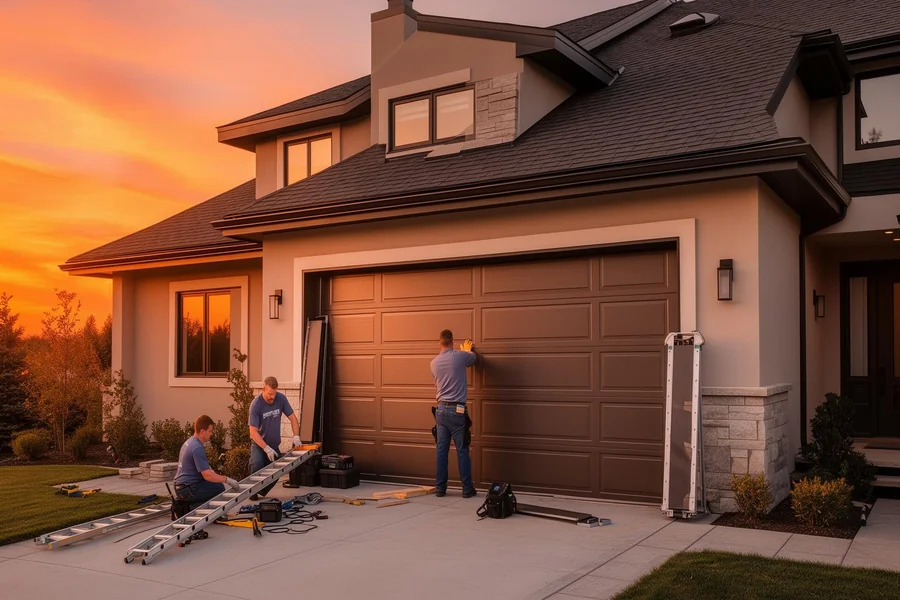
The homeowners who get the best service — and the best prices — are rarely the ones calling in a crisis. They’re the ones who did fifteen minutes of research on a Tuesday afternoon, picked a provider they trusted, and saved the number. If you’re doing that research now for Canyon Lake garage door repair, this guide will walk you through exactly how to filter a crowded local market and land on a contractor worth keeping on speed dial.
How Many Garage Door Contractors Actually Serve Canyon Lake?
Canyon Lake sits inside a gated community of roughly 10,000 residents in Southwest Riverside County — which means the contractor pool is smaller and more specialized than you’d find in a major metro. In my experience working this region, you’re typically looking at somewhere between a dozen and twenty active service providers at any given time, ranging from one-man operations to small crews with dedicated installers.
That size actually works in your favor. Smaller markets punish bad actors faster because word travels quickly inside a tight-knit community. But it also means fewer options if you wait until your door is stuck halfway and you need someone in two hours. Doing the legwork now, before a spring snaps or an opener quits, puts you in the driver’s seat.
Licensing and Insurance: The Two Filters That Cut the List in Half
California requires garage door contractors to hold a valid C-61/D28 specialty license issued by the Contractors State License Board (CSLB). You can verify any contractor’s license status in under sixty seconds at the CSLB’s online lookup tool — search by business name or license number.
Beyond the license, ask specifically for a certificate of general liability insurance and proof of workers’ compensation coverage. I’ve seen homeowners skip this step and end up footing the bill when a technician was injured on their property, or when a door panel cracked during installation and the contractor had no coverage to pay for it. These aren’t hypothetical scenarios — they happen more often than the industry likes to admit.
Any contractor who hesitates to share these documents on request is worth crossing off your list immediately.
Reading Review Patterns Like a Professional (Not Just Star Ratings)
A 4.8-star average tells you almost nothing on its own. What matters is the pattern underneath the rating. I always advise homeowners to look for three things:
Recency. A company with 80 reviews but nothing posted in the last six months may have changed ownership, lost key staff, or let service quality slide. Look for consistent activity within the past 90 days.
Specificity. Reviews that mention a technician’s name, a specific repair type (torsion spring, cable drum, wall-mount opener), or a turnaround time are far more credible than generic five-star praise. Vague reviews are easy to fabricate; detailed ones are hard to fake at scale.
How they handle negatives. A one-star review isn’t the story — the owner’s response is. Contractors who apologize, offer to make things right, and follow up publicly are showing you their actual culture. Defensive or dismissive responses tell you something equally important.
The Referral Network That Most Homeowners Overlook
Canyon Lake has one of the more active community association structures in Riverside County. The HOA management office, the Canyon Lake POA forums, and neighborhood Facebook groups are all legitimate places to source referrals — and because the community is gated, contractors who work here regularly have a built-in reputation to protect.
Beyond neighbors, I’d suggest calling a local real estate agent or a property inspector. Both interact with garage door contractors constantly during transactions and inspections, and they tend to have strong opinions about who’s reliable and who they’ve stopped recommending. That professional referral layer filters out a lot of noise.
Hardware store staff at nearby Lowe’s or Home Depot locations sometimes have informal knowledge of who the reliable local techs are, too — especially if the store sells garage door parts and sees contractor staff buying supplies regularly.
Six Questions to Ask Before Scheduling Any Appointment
When you call to vet a contractor, treat it like a short interview. Here’s what I’d ask:
- Are you licensed with the CSLB, and can you share your license number? Any reputable contractor answers this without hesitation.
- Do you carry general liability and workers’ comp? Same expectation — immediate, confident answer.
- Do you charge a service call or diagnostic fee, and is it credited toward the repair? This tells you a lot about their pricing model upfront.
- What brands of springs, cables, and openers do you stock? A contractor who stocks quality parts (LiftMaster, Clopay, Wayne Dalton) from their truck avoids the “we’ll have to order it” delay that stretches a one-hour job into a three-day wait.
- Do you offer a warranty on parts and labor? Industry standard is 90 days minimum on labor; 1–5 years on parts depending on the component.
- Can you give me a written estimate before any work begins? This is non-negotiable. Any verbal-only quote is a liability.
If a contractor fumbles more than one of these questions, move on. There are good options serving Canyon Lake, and the trusted garage door companies near me in Canyon Lake that have earned their reputation will clear every item on this list without breaking a sweat.
What a Fair Estimate Process Looks Like From Start to Finish
A legitimate Canyon Lake contractor will show up, physically inspect the door and opener system, and then present a written itemized quote — parts, labor, and any applicable fees listed separately. They will not ask you to approve work before you’ve seen a number.
Watch for estimates delivered over the phone without an inspection — these almost always change once the tech arrives. Also watch for quotes that bundle everything into a single dollar figure with no line items. You can’t compare or negotiate what you can’t see.
If you’ve done your homework before anything breaks, you already know what a reasonable spring replacement costs (typically 150–350 for a standard torsion spring in California), what opener installation runs (200–450 depending on horsepower and drive type), and what a cable repair should be. That baseline knowledge is the simplest defense against overcharging — and it starts with the research you’re doing right now.
The homeowners who call under pressure almost always pay more. The ones who plan ahead almost always don’t.