
Understanding Variable Step-Down Transformers and Their Everyday Applications
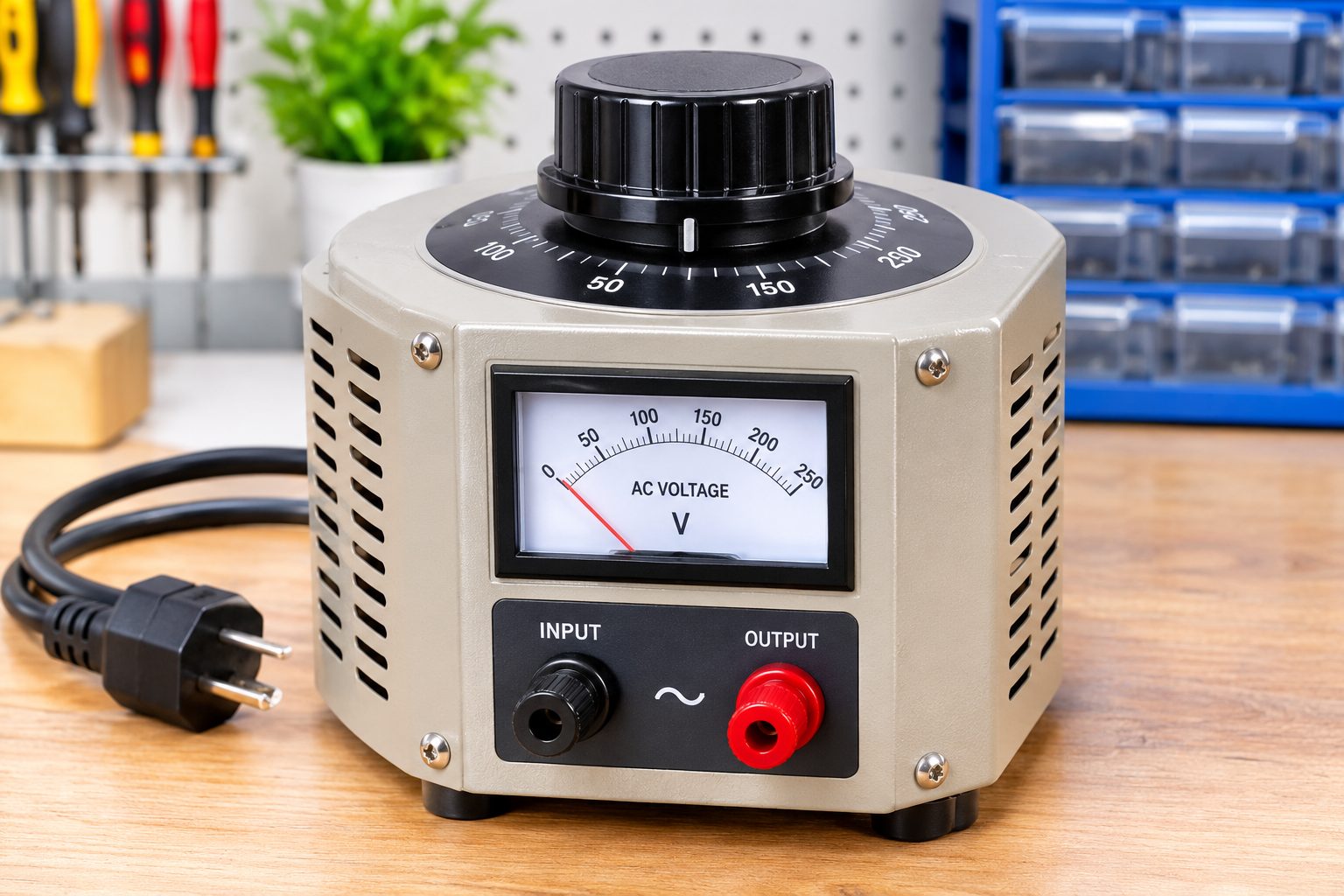
Electrical equipment is designed to operate within specific voltage limits. Supplying a device with the wrong voltage can affect its performance, cause overheating or damage sensitive components. In applications where the output voltage needs to be adjusted, a variable step-down transformer offers a practical way to control the AC supply.
These transformers are used in electrical testing, laboratories, workshops and industrial environments where equipment requires a lower or adjustable voltage. Their ability to provide a range of output voltages makes them useful for testing devices under different operating conditions. For those sourcing this equipment, RS Components Malaysia | Purchase variable step down transformers offers a relevant option to explore.
Understanding how a variable step-down transformer works, along with its limitations, helps users select suitable equipment and operate it safely.
What Is a Variable Step-Down Transformer?
A variable step-down transformer is an electrical device designed to reduce an incoming alternating current (AC) voltage while allowing the output voltage to be adjusted within a specified range.
A conventional step-down transformer has a fixed turns ratio between its primary and secondary windings. This ratio determines how much the input voltage is reduced. A variable transformer, by comparison, allows the output voltage to change through an adjustable mechanism.
One common design uses a movable carbon brush that makes contact with a winding. Turning a control knob moves the brush along the winding, changing the point from which the output voltage is taken. This allows the user to increase or decrease the output within the equipment's rated limits.
Many variable transformers use an autotransformer design, where part of the winding is shared between the input and output circuits. This makes the equipment relatively compact, but it also means the input and output are electrically connected rather than isolated.
How Does a Variable Step-Down Transformer Work?
The operation of a variable transformer is based on electromagnetic induction. When an AC supply passes through a transformer winding, it produces a changing magnetic field. This field induces an electrical voltage in the winding.
In a typical variable autotransformer, the input is connected across the winding, while the output is taken from the movable brush and a fixed connection. Moving the brush changes the effective number of winding turns used for the output.
When the brush is positioned to provide a lower voltage, the output is reduced. Moving it towards a point with a greater number of effective turns increases the output voltage.
The exact adjustment range depends on the transformer's design. Some models provide a variable output from zero to a voltage close to the input supply, while others are designed for different input and output ranges.
It is important to understand that variable voltage does not automatically mean regulated voltage. The output can change when the input supply or connected load changes. A separate voltage regulator or stabiliser is needed when an application requires a more consistent output despite supply fluctuations.
Common Applications in Different Settings
Variable step-down transformers are useful wherever controlled AC voltage is needed. Their applications range from routine electrical testing to specialised industrial processes.
Electrical testing and laboratories
Technicians and engineers often need to test equipment at different voltage levels. A variable transformer allows them to increase voltage gradually and observe how a device responds. This is useful when checking electrical components, conducting experiments or evaluating equipment performance.
Industrial equipment testing
Manufacturers and maintenance teams sometimes need to examine how electrical equipment performs under different supply conditions. Adjustable voltage helps create controlled test conditions, provided the transformer has the correct electrical rating and the testing procedure follows relevant safety requirements.
Workshops and repair facilities
Electrical repair technicians may use variable transformers when troubleshooting certain AC-powered devices. They can adjust the supply during testing instead of applying full voltage immediately. The equipment must still be suitable for the device being tested, and additional protection might be necessary.
Educational institutions
Technical schools and engineering laboratories use variable transformers to demonstrate electrical principles. Students can observe how voltage changes in relation to winding connections and load conditions.
Specialised electrical processes
Some applications require a controlled AC voltage rather than a fixed supply. Depending on the equipment and process requirements, a variable transformer can provide the adjustment needed for testing or operation.
Safety Considerations During Operation
A variable transformer should be treated as electrical equipment that presents a potentially serious shock and fire risk. Its adjustable output does not make it safe to handle while energised.
Users should check the equipment's condition before operation, including its cables, terminals, enclosure and adjustment mechanism. Proper earthing and correctly rated protective devices are essential where required by the design and applicable electrical standards.
The output should remain within the connected equipment's permitted voltage range. Avoid exceeding the transformer's current and power ratings, and allow sufficient ventilation to prevent overheating.
The movable brush and winding can also present exposed live electrical parts in some designs. Connections, repairs and installation should be handled by qualified electrical personnel. A variable transformer is not a substitute for a properly designed regulated power supply, and it does not convert DC into AC or AC into DC.
Final Thoughts
A variable step-down transformer provides adjustable AC voltage for testing, maintenance, laboratory work and selected industrial applications. Its operating principle is relatively straightforward, but choosing the right unit requires attention to voltage range, power capacity, frequency and protection features.
It is equally important to understand its limitations. Many variable transformers do not provide electrical isolation or automatic voltage regulation. Matching the equipment to the application and following proper electrical safety procedures will help ensure reliable operation.