
AI in Healthcare: Transforming Patient Care Today
Introduction
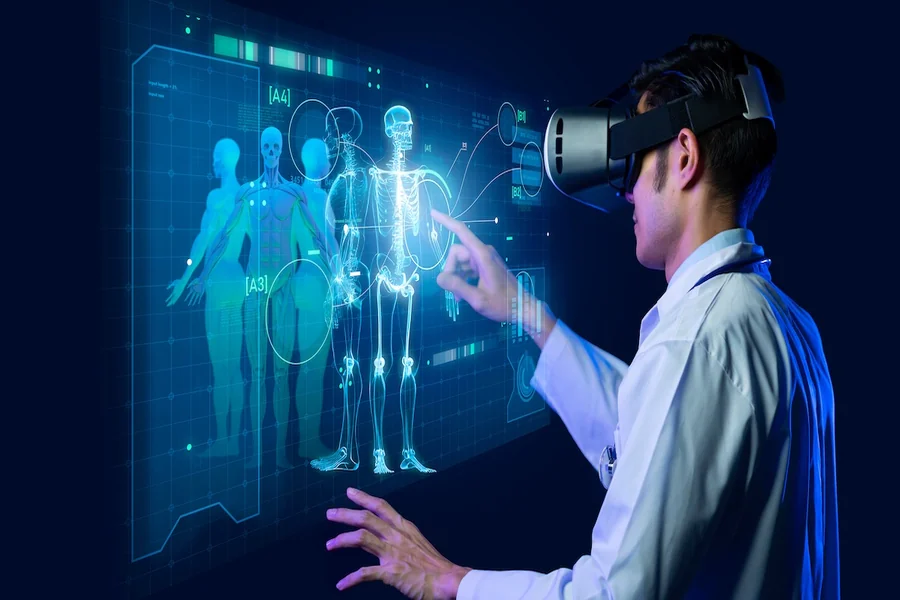
AI in healthcare is rapidly reshaping how medical professionals diagnose, treat, and care for patients. What once seemed like a futuristic concept is now a practical tool used in hospitals, clinics, and research labs around the world. From analyzing medical images to predicting disease risks, artificial intelligence is helping healthcare providers deliver faster, more accurate, and more personalized care.
As technology continues to evolve, its role in medicine becomes even more significant. The integration of intelligent systems not only enhances efficiency but also opens new possibilities for improving patient outcomes and reducing costs. Understanding how these innovations work—and their impact—is essential for anyone interested in the future of healthcare.
Enhancing Diagnosis and Early Detection
One of the most powerful applications of AI in healthcare is its ability to assist in diagnosis. Machine learning algorithms can analyze vast amounts of medical data far more quickly than humans, identifying patterns that might otherwise go unnoticed.
For example, AI-powered tools are now widely used in radiology to detect abnormalities in X-rays, MRIs, and CT scans. These systems can identify early signs of diseases such as cancer, often with remarkable accuracy. In some cases, AI can even outperform human specialists, especially when trained on large datasets.
Early detection is critical in treating many conditions. By identifying diseases at an earlier stage, doctors can begin treatment sooner, improving the chances of recovery. AI also helps reduce diagnostic errors, which remain a significant challenge in healthcare systems worldwide.
Beyond imaging, AI is also used in analyzing patient histories, lab results, and genetic data. This comprehensive approach enables healthcare providers to make more informed decisions and tailor treatments to individual patients. For more information you can visit techpora.
Personalized Treatment and Precision Medicine
Every patient is different, and AI is helping to bring truly personalized care into reality. Precision medicine focuses on customizing treatments based on an individual’s genetic makeup, lifestyle, and environment. Artificial intelligence plays a key role in making this possible.
By analyzing large datasets, AI can identify which treatments are most effective for specific groups of patients. This allows doctors to move away from a one-size-fits-all approach and instead provide targeted therapies that are more likely to succeed.
For instance, in oncology, AI systems can analyze tumor genetics to recommend specific drugs or treatment plans. This not only improves outcomes but also reduces unnecessary side effects from ineffective treatments.
AI also supports personalized care through wearable devices and health apps. These tools monitor vital signs, activity levels, and other health indicators in real time. The data collected can be analyzed to provide personalized recommendations, helping patients manage chronic conditions such as diabetes or heart disease more effectively.
Improving Efficiency in Healthcare Systems
Healthcare systems around the world face challenges such as staff shortages, rising costs, and increasing patient demand. AI offers solutions that can improve efficiency and reduce the burden on healthcare professionals.
Administrative tasks, such as scheduling appointments, managing records, and processing insurance claims, can be automated using AI-powered systems. This allows healthcare workers to focus more on patient care rather than paperwork.
AI is also being used to optimize hospital operations. For example, predictive analytics can forecast patient admissions, helping hospitals allocate resources more effectively. This can reduce waiting times and improve the overall patient experience.
In emergency care, AI tools can prioritize patients based on the severity of their conditions. This ensures that critical cases receive immediate attention, potentially saving lives.
By streamlining processes and improving resource management, AI contributes to a more efficient and responsive healthcare system.
Advancing Drug Discovery and Research
Developing new drugs is a complex and time-consuming process, often taking years and significant financial investment. AI is accelerating this process by analyzing biological data and identifying potential drug candidates more quickly.
Machine learning models can predict how different compounds will interact with the human body, reducing the need for extensive trial-and-error testing. This speeds up the early stages of drug development and increases the likelihood of success.
AI is also helping researchers identify new uses for existing medications, a process known as drug repurposing. This can lead to faster treatments for emerging diseases, as seen during global health crises.
In addition, AI supports clinical trials by identifying suitable participants and monitoring their progress. This improves the efficiency of trials and ensures more reliable results.
By enhancing research capabilities, AI is playing a crucial role in bringing new treatments to patients faster than ever before.
Ethical Challenges and Data Privacy Concerns
While the benefits of AI in healthcare are significant, they also come with important ethical considerations. One of the primary concerns is data privacy. Healthcare data is highly sensitive, and ensuring its security is essential.
AI systems rely on large datasets to function effectively. This raises questions about how patient data is collected, stored, and used. Strict regulations and safeguards are necessary to protect patient information and maintain trust.
Another challenge is the potential for bias in AI algorithms. If the data used to train these systems is not diverse, the results may not be accurate for all populations. This can lead to unequal treatment and disparities in healthcare outcomes.
There is also the question of accountability. When AI systems are involved in decision-making, it can be unclear who is responsible for errors or misdiagnoses. Clear guidelines and oversight are needed to address these issues.
Balancing innovation with ethical responsibility is essential to ensure that AI benefits all patients without compromising their rights or safety.
The Future of AI in Healthcare
The future of AI in healthcare looks promising, with ongoing advancements expected to further transform the industry. As technology continues to improve, AI systems will become even more accurate, reliable, and accessible.
Telemedicine, combined with AI, is likely to expand, allowing patients to receive care remotely. Virtual assistants and chatbots will play a larger role in providing medical advice and support, especially in underserved areas.
Robotic surgery, guided by AI, will continue to evolve, offering greater precision and reducing recovery times. Additionally, predictive analytics will help identify potential health risks before they become serious, enabling preventive care.
Collaboration between healthcare professionals and AI systems will be key. Rather than replacing doctors, AI will serve as a powerful tool that enhances their capabilities and supports better decision-making.
As adoption grows, it will be important to ensure that these technologies are implemented responsibly and equitably, so that everyone can benefit from improved healthcare services.
Final Thought
AI in healthcare is not just a technological advancement—it is a fundamental shift in how medical care is delivered. By improving diagnosis, enabling personalized treatment, increasing efficiency, and accelerating research, artificial intelligence is transforming patient care in meaningful ways.
However, with great potential comes great responsibility. Addressing ethical concerns, ensuring data privacy, and maintaining human oversight are essential to building trust in these systems.
As we move forward, the integration of AI into healthcare will continue to evolve, offering new opportunities to improve lives. The goal is not to replace human expertise but to enhance it, creating a future where technology and compassion work together to deliver better care for all.