
Ultimate Inflatable Event Checklist
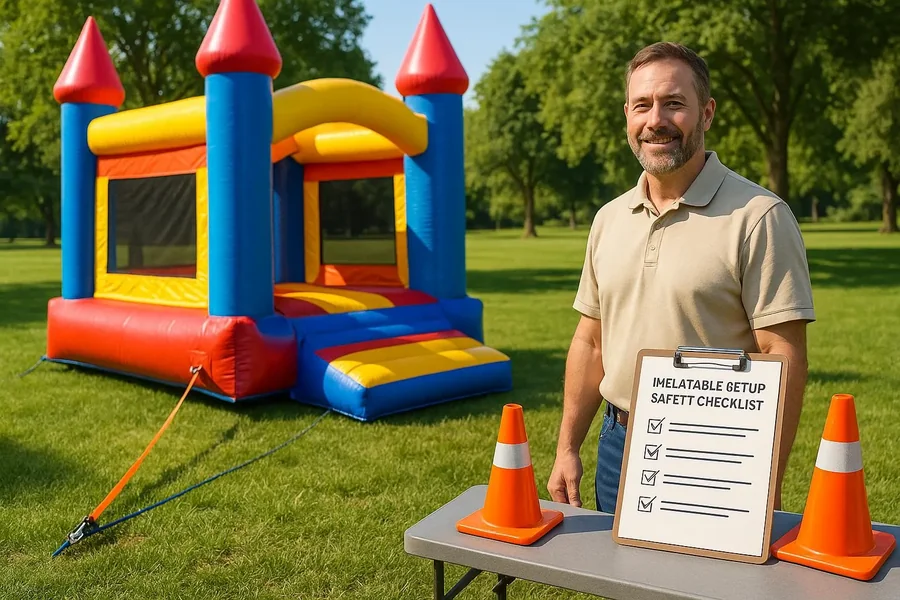
The Ultimate Inflatable Event Checklist: Everything You Need for a Flawless Setup
After managing over 200 inflatable events in the past three years, I’ve learned that success comes down to preparation. A forgotten extension cord, inadequate anchoring, or missing safety equipment can turn an exciting event into a stressful disaster. This comprehensive checklist represents lessons learned from both my successes and my failures.
Pre-Event Planning (2-4 Weeks Before)
Start by confirming your venue dimensions and access points. I once arrived at a backyard party only to discover that our largest inflatable couldn’t fit through the side gate. Measure twice, confirm once—get exact measurements of setup areas, gate widths, and pathway clearances.
Verify electrical requirements early. Most commercial inflatables need dedicated 15-20 amp circuits. Residential circuits often can’t handle multiple units simultaneously. Know your power needs and confirm availability with venues. Extension cords should be outdoor-rated, minimum 12-gauge, and never daisy-chained.
Check weather forecasts as your event approaches. Wind represents the biggest safety concern for inflatables. Most manufacturers specify maximum wind speeds (typically 15-25 mph). Have backup plans for severe weather and clear cancellation policies that protect both you and clients.
Essential Equipment Checklist
Beyond the inflatables themselves, successful events require supporting equipment many beginners overlook:
Power and Electrical:
- Sufficient extension cords (outdoor-rated, 12-gauge minimum)
- Power strips with circuit breakers
- Generator (if venue lacks adequate outlets)
- Cord covers for pedestrian areas
- Voltage tester
Anchoring and Safety:
- Ground stakes (18-24 inches, one per anchor point)
- Sandbags (for surfaces where staking isn’t possible)
- Hammer or mallet for stake installation
- Safety cones and barrier tape
- Fire extinguisher (especially for indoor events)
Setup and Maintenance:
- Blowers (plus backup blower)
- Tarps for ground protection
- Cleaning supplies and sanitizer
- Repair kit with patches and vinyl adhesive
- Basic tool kit
Documentation and Operations:
- Insurance certificates
- Safety rules signage
- Waiver forms
- Setup instructions
- Emergency contact information
Day-Before Preparation
Inspect all equipment thoroughly the day before your event. Check inflatables for tears, worn seams, or damaged zippers. Test blowers to ensure they’re functioning properly. Verify that you have all anchoring equipment, extension cords, and safety gear loaded and ready.
Charge your phone fully and bring backup power banks. You’ll be taking setup photos, coordinating with clients, and potentially dealing with emergencies. Dead phone batteries create unnecessary stress.
Review setup instructions even for familiar equipment. Fatigue or distraction causes mistakes that proper preparation prevents. Know your setup time requirements and build in buffer time for unexpected complications.
Setup Day Protocol
Arrive early—at least 30 minutes before your committed setup time. Early arrival provides buffer time for unexpected challenges and demonstrates professionalism that clients appreciate.
Walk the setup area before unloading equipment. Identify any obstacles, hazards, or layout concerns. Check for overhead power lines, sprinkler heads, or ground conditions that might affect placement or anchoring.
Lay tarps before positioning inflatables to protect them from ground moisture and debris. Position inflatables according to your pre-planned layout, ensuring adequate spacing between units and clear pathways for participants.
Anchor everything securely before inflation. This is critical for safety and often required by insurance. Ground stakes should penetrate at least 18 inches in appropriate soil. For hard surfaces, use properly weighted sandbags at every anchor point.
Safety Verification
Before allowing anyone near inflatables, complete these safety checks:
- All anchor points properly secured
- Blowers securely attached and functioning
- Extension cords properly routed and protected
- Emergency exits unobstructed
- Safety signage visible
- Age/height restrictions posted
- Supervision plan established
Walk around each inflatable checking for proper inflation, secure connections, and any hazards. Take photos of your setup for documentation and future marketing use.
During Event Management
Assign responsible adults to monitor each inflatable continuously. Supervision prevents most accidents and ensures rules are followed. Monitor weather conditions throughout events—be prepared to deflate units quickly if wind increases.
Check inflatable pressure periodically. Properly inflated units maintain structural integrity and safety features. Listen for unusual blower sounds that might indicate problems.
Post-Event Procedures
Deflate and pack equipment systematically to prevent damage and ensure nothing gets left behind. Clean inflatables before packing—removing debris while it’s fresh is far easier than dealing with dried, embedded dirt later.
Inspect equipment again during breakdown. Identify any damage that needs repair before the next event. Document issues and complete repairs promptly to maintain your inventory in prime condition.
Working With Quality Suppliers
Equipment quality directly impacts event success and preparation requirements. Got Inflatables and similar professional suppliers provide commercial-grade products designed for rental use, which means more reliable performance and fewer emergency repairs during events.
Final Thoughts
Successful inflatable events result from thorough preparation, proper equipment, and attention to safety details. This checklist has saved me from countless potential problems and helped establish a reputation for professional, reliable service. Use it, adapt it to your specific needs, and add notes based on your experiences. The few extra minutes spent on preparation prevent hours of stress during events.