
Scenario Modeling: Planning for Multiple Outcomes
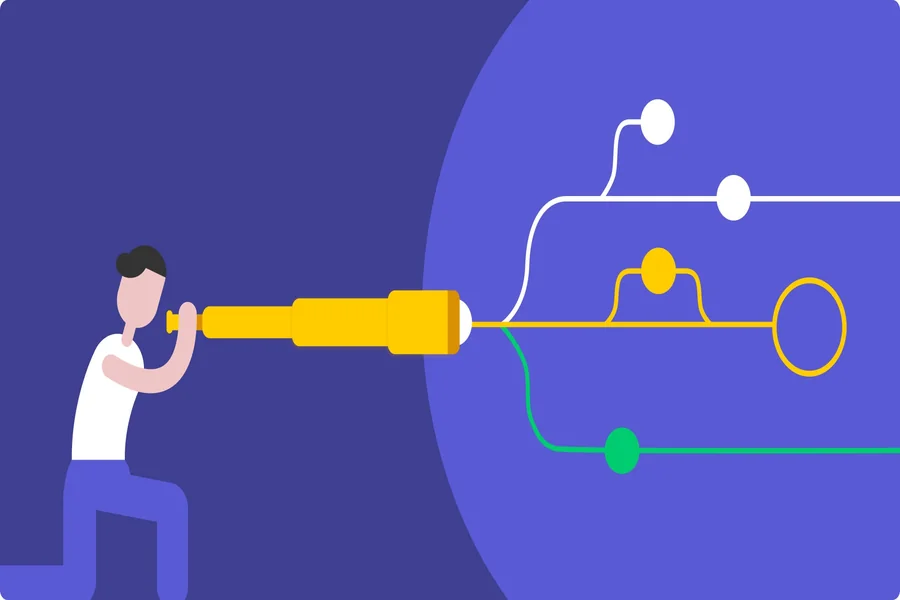
What happens if market demand drops suddenly? What if regulations tighten faster than expected, or a new technology disrupts an entire industry overnight? How can leaders make decisions today when tomorrow remains uncertain? These questions reflect the reality facing organizations across every sector. Scenario modeling offers a structured way to confront uncertainty by exploring multiple plausible futures and preparing for a range of possible outcomes rather than betting on a single forecast.
What Is Scenario Modeling?
Scenario modeling (or scenario planning) is a structured approach to exploring how different combinations of key uncertainties might shape the future. Instead of predicting what will happen, it asks a more useful question: What could happen, and how would we respond? By developing a set of coherent, plausible scenarios, organizations can test decisions, identify risks and opportunities, and design strategies that remain resilient no matter which path unfolds.
Unlike traditional forecasting, which often extrapolates trends into a single expected outcome, scenario modeling embraces uncertainty. It acknowledges that complex systems—markets, societies, ecosystems—rarely behave in linear or predictable ways.
Why Scenario Modeling Matters
The value of scenario modeling lies in preparedness and agility. Organizations that practice it consistently tend to make better decisions for several reasons:
- Improved risk awareness: Scenarios surface hidden vulnerabilities and dependencies that may be overlooked in standard planning.
- Better strategic choices: Testing strategies across multiple futures reveals which options are robust versus fragile.
- Faster response times: When change occurs, teams that have already explored similar scenarios can act decisively.
- Reduced bias: Scenario modeling challenges assumptions and counteracts overconfidence in a single forecast.
- Stronger alignment: Shared scenarios help leaders and teams develop a common understanding of risks and priorities.
Core Elements of Effective Scenario Modeling
While approaches vary, effective scenario modeling typically includes the following elements:
- Clear decision focus
Scenario modeling should start with a specific strategic question, such as market entry, capital investment, supply chain design, or policy response. Without a clear focus, scenarios risk becoming abstract and disconnected from decisions. - Identification of key drivers
Drivers are forces that shape outcomes—economic growth, technology adoption, regulation, consumer preferences, or geopolitical stability. Some drivers are relatively predictable, while others are highly uncertain. The most impactful and uncertain drivers are usually the backbone of scenarios. - Critical uncertainties
Scenario frameworks often revolve around two or three critical uncertainties that create distinct futures when combined. For example, high versus low demand and strict versus relaxed regulation can yield four contrasting scenarios. - Plausible, coherent narratives
Scenarios are not random possibilities; they are internally consistent stories about how the world might evolve. Each scenario should make sense, even if it is uncomfortable or unlikely. - Strategic implications
The real value comes from analyzing how strategies perform in each scenario. This step translates imagination into actionable insight.
Types of Scenarios
Organizations commonly use several types of scenarios, depending on their goals:
- Baseline scenarios: Extensions of current trends that represent “business as usual.”
- Optimistic and pessimistic scenarios: Best-case and worst-case futures that test resilience.
- Exploratory scenarios: Broad, divergent futures designed to challenge assumptions.
- Normative scenarios: Futures built around a desired outcome, used to guide long-term vision and policy.
Using a mix of these types helps balance realism with creativity.
The Scenario Modeling Process
A typical scenario modeling process follows several steps:
- Define the scope and time horizon. Decide what decision you are informing and how far into the future you need to look.
- Map drivers and uncertainties. Brainstorm internal and external forces, then prioritize them by impact and uncertainty.
- Build scenarios. Combine critical uncertainties into a small set (usually three to five) of distinct scenarios.
- Stress-test strategies. Ask how current or proposed strategies perform in each scenario, often supported by quantitative modeling tools like Analytica that help simulate complex cause-and-effect relationships.
- Identify signposts. Define early indicators that suggest which scenario may be emerging.
- Integrate into planning. Use insights to adjust investments, policies, and contingency plans.
Common Pitfalls to Avoid
Despite its benefits, scenario modeling can fall short if misapplied:
- Too many scenarios: An excessive number can overwhelm decision-makers. Focus on a manageable set.
- Unrealistic extremes: Scenarios should stretch thinking without becoming implausible.
- Lack of follow-through: Scenarios that do not inform real decisions quickly lose relevance.
- Treating scenarios as predictions: Their purpose is preparation, not accuracy.
Avoiding these pitfalls requires discipline and a commitment to using scenarios as living tools rather than one-off exercises.
Scenario Modeling in Practice
Scenario modeling is used across industries and sectors. Businesses apply it to investment planning, supply chain resilience, and innovation strategy. Governments use it for policy development, infrastructure planning, and emergency preparedness. Nonprofits and educational institutions use scenarios to plan for funding shifts, demographic change, and technological transformation.
In each case, the emphasis is the same: understanding uncertainty before it becomes a crisis.
Building a Scenario-Ready Culture
The most effective scenario modeling is not a single workshop but an ongoing capability. Organizations can build this capability by encouraging long-term thinking, rewarding curiosity, and regularly revisiting assumptions. When leaders normalize discussions about uncertainty, teams become more comfortable adapting to change.
Conclusion
Scenario modeling is a powerful way to plan in an unpredictable world. By shifting the focus from prediction to preparedness, it enables organizations to navigate uncertainty with confidence and flexibility. Rather than asking which future is most likely, scenario modeling asks which strategies will succeed across many possible futures. In doing so, it transforms uncertainty from a threat into a strategic advantage.