
From World Cup Fever to Weekend Habit: How American Fans Are Following European Soccer
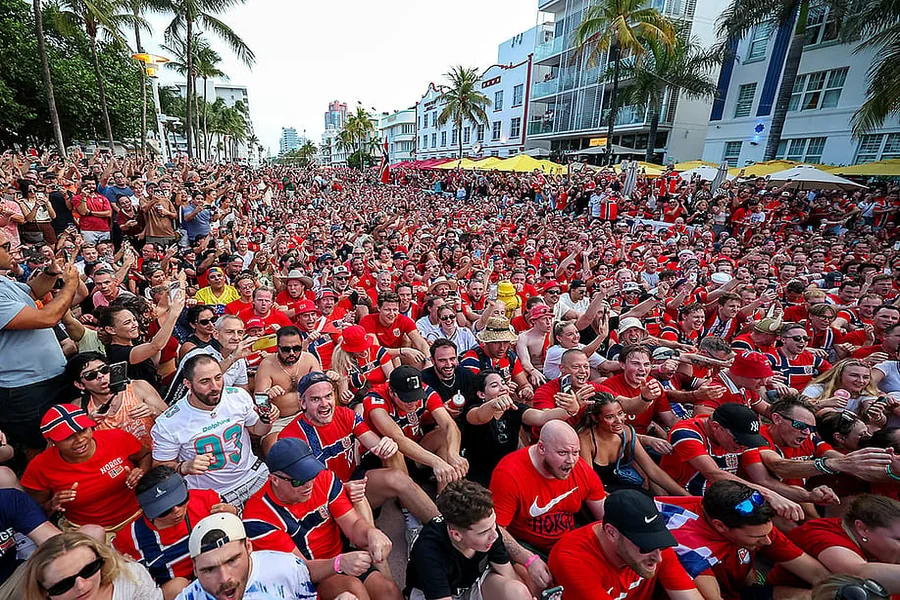
For six weeks this summer, soccer was impossible to ignore in the United States. The 2026 World Cup brought 104 matches to 16 cities across the US, Canada and Mexico, with 11 American host cities and a final at MetLife Stadium in New Jersey on July 19. Millions of Americans who had never paid much attention to the sport found themselves checking group tables, arguing about penalties and planning their days around kick-off times. Now that the tournament is over, many of those new fans are asking the same question: how do you keep following the game when the World Cup has gone home?
The biggest World Cup ever, on home soil
The 2026 tournament was the first with 48 teams instead of 32, which meant more matches, more nations and more chances for casual viewers to get hooked. With games spread across stadiums from Seattle to Miami, many Americans could watch elite international soccer in person for the first time, while the rest followed on television at convenient local times rather than the early mornings of previous tournaments held in Europe or Asia.
That convenience mattered. For years, one of the biggest barriers for American fans was the clock. A World Cup in North America removed that barrier, and the result was a summer in which soccer became part of everyday conversation in offices, bars and group chats. The challenge now is keeping that momentum going through a club season played mostly an ocean away.
Where the action moves next: Europe’s big leagues
For most of the year, the world’s best players compete in the major European leagues: the Premier League in England, La Liga in Spain, the Bundesliga in Germany, Serie A in Italy and Ligue 1 in France. Many of the stars Americans watched this summer play their club soccer there, which makes those leagues the natural next step for new fans who want to keep following familiar names.
The Premier League is the easiest entry point for most Americans. NBCUniversal holds the US rights through 2028, with every match available across NBC, USA Network and Peacock. The other big leagues are spread across different streaming services, so it is worth checking where your favorite players’ clubs are shown before you commit to a subscription.
Getting the timing right
The clock is back in play once the club season starts. England is five hours ahead of the East Coast for most of the season, so a traditional 3 pm Saturday kick-off in England starts at 10 am Eastern, and the early 12:30 pm game starts at 7:30 am. For fans on the West Coast, that means very early mornings, which is why weekend soccer breakfasts at local pubs have become a tradition in many American cities.
Matches in Spain, Italy, Germany and France usually run an hour later in local time, which often lands them in the American afternoon. Midweek European competitions such as the Champions League are typically played in the European evening, which means afternoon kick-offs on the East Coast. A quick check of the fixture list each week saves a lot of missed games.
The stats that help new fans make sense of the game
Soccer can look simple: one ball, two goals, ninety minutes. But a few key numbers make it much easier to understand what is happening, especially in a low-scoring sport where the final score does not always tell the whole story:
1.Clean sheets: a game in which a team does not concede a goal. It is the standard measure of a strong defense and goalkeeper.
2. Expected goals (xG): a measure of how good a team’s chances were, based on where and how each shot was taken. A team that loses 1-0 while creating far better chances may simply have been unlucky.
3. Form: a team’s recent results, usually shown as a string of wins, draws and losses over the last five matches.
4. Home and away records: some teams are far stronger at home, where crowd support and familiar conditions can make a real difference.
Free statistics platforms such as FootyPulse.org collect these numbers for leagues around the world, from goal and corner statistics to clean sheets and form guides. For a new fan, browsing a team’s numbers for a few minutes before a match can make the game far more interesting to watch, because you know what to look for.
How soccer predictions work
Alongside the stats, many fans now check model-based forecasts before a game. These models use team strength, recent form, home advantage and underlying numbers such as expected goals to estimate the probability of a home win, a draw or an away win. Instead of a simple guess, they give a percentage, such as a 48 percent chance of a home win, 26 percent for a draw and 26 percent for the visitors.
For new fans, data-driven soccer predictions are a useful way to understand which teams are expected to do well and why. They also highlight one of the things that makes the sport so compelling: even a clear favorite often has less than a 50 percent chance of winning, because draws are common and a single goal can change everything. The surprise results that made this summer’s World Cup so memorable happen every weekend in club soccer too.
Turning a summer interest into a lasting habit
The easiest way to stay hooked is to pick a team. Many new fans choose a club because of a favorite player from the World Cup, a city they have visited, or simply the colors on the shirt. Following one team gives every weekend a storyline, and it makes it easier to learn the rivalries, the league table and the players who matter.
Beyond that, local supporter groups and pubs that show European games have grown in cities across the country, and Major League Soccer offers a chance to watch live professional matches closer to home. Combine a weekly game with a few minutes on a stats site such as FootyPulse.org, and within a season the sport that seemed foreign a year ago can become a regular part of the weekend.
Frequently asked questions
Where can I watch the Premier League in the US?
NBCUniversal holds the exclusive US rights to the Premier League through 2028. Matches are shown across NBC, USA Network and the Peacock streaming service, with Spanish-language coverage on Telemundo and Universo. Most games are on Peacock or USA Network, so a combination of a streaming subscription and cable or a live TV service covers almost every match of the season.
What time do Premier League games start in the US?
Because England is usually five hours ahead of the East Coast, the traditional Saturday 3 pm kick-off in England starts at 10 am Eastern and 7 am Pacific. The early Saturday game starts at 7:30 am Eastern, while late games and Sunday fixtures often fall in the late morning or early afternoon. Midweek matches are typically played in the afternoon on the East Coast.
What does a clean sheet mean in soccer?
A clean sheet means a team did not concede a single goal during a match. It is credited to the team as a whole and often highlighted for the goalkeeper and defenders, since it reflects a strong defensive performance. Over a season, the number of clean sheets is one of the simplest ways to compare how solid different teams are at the back.
If you choose to bet on soccer, treat it as entertainment and only bet what you can afford to lose. You must meet your state’s legal age to gamble. If you or someone you know has a gambling problem, call 1-800-GAMBLER or visit 1800gambler.net for free and confidential support.