
How Do Helicopter Lessons Differ From Airplane Flight Lessons?
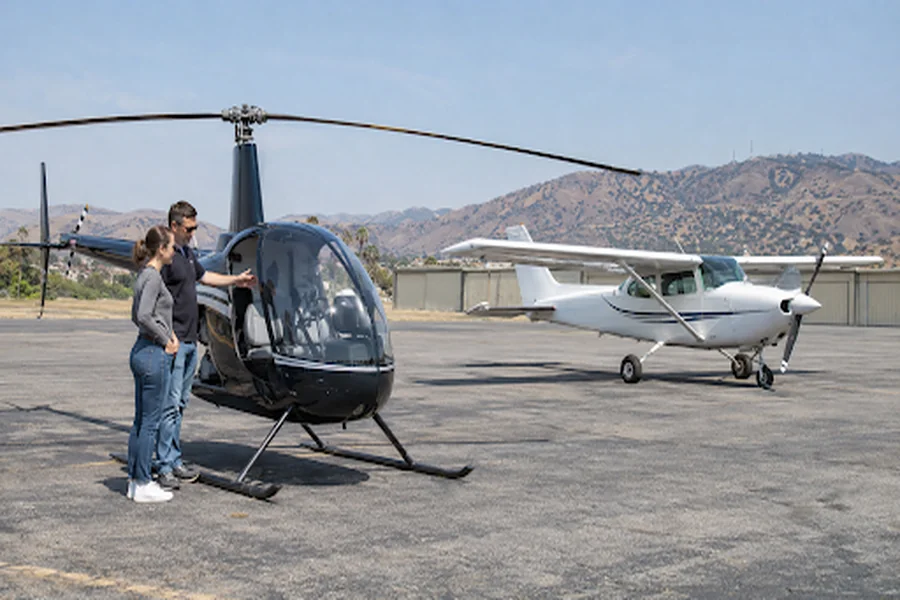
Helicopter and airplane flight lessons differ mainly in how students control the aircraft, take off, and land. Both teach safe decision-making, but the physical experience can feel different from the first lesson.
If you are choosing between them, think about the kind of flying you want to do. Understanding what happens during training can help you compare schools, set expectations, and decide which aircraft interests you more.
The Controls Require Different Coordination
In a typical training airplane, students use a yoke or stick, rudder pedals, and a throttle. These controls work together to manage the airplane’s attitude, direction, and power.
During helicopter lessons, students learn to coordinate the cyclic, collective, and anti-torque pedals. The cyclic tilts the rotor’s thrust, the collective changes blade pitch together, and the pedals control heading during a hover.
Moving one helicopter control often requires adjustments to the others. Early lessons focus on small, coordinated inputs rather than large corrections.
Hovering Adds A New Learning Challenge
Airplane students usually begin with basic maneuvers in forward flight. They learn to maintain altitude, turn, climb, and descend while managing airspeed.
Helicopter students practice those skills too, but they also learn to hover. Holding a helicopter over one spot requires continuous attention to height, heading, and sideways or forward movement.
Hovering often feels awkward initially. An instructor may introduce individual controls separately before asking you to coordinate them together.
Takeoffs And Landings Follow Different Patterns
Most training airplanes accelerate along a runway before lifting off. Landing lessons emphasize approach planning, airspeed control, alignment, and a smooth touchdown while moving forward.
Helicopters can lift into a hover and transition into forward flight. Students practice approaches that may end in a hover, followed by a controlled landing.
That flexibility brings additional responsibilities. Instructors teach students to evaluate obstacles, wind, surface conditions, and available power before using a landing area.
Emergency Training Matches The Aircraft
Both types of lessons include recognizing problems and responding calmly. Students practice procedures with an instructor under controlled conditions.
Airplane training includes managing a glide after a simulated engine failure. Helicopter training includes autorotation, where airflow keeps the rotor turning during a descent without engine power.
The techniques differ, but the purpose stays consistent: manage the aircraft, choose suitable options, and follow the correct procedure.
Previous Airplane Experience Helps, With Limits
Airplane pilots bring useful knowledge of weather, navigation, radio communication, and airspace. However, helicopter handling and emergency procedures still require dedicated instruction.
A helicopter add-on rating lets an existing pilot add helicopter privileges to their certificate. Training requirements depend on the certificate and ratings already held, so an instructor should review your experience before estimating the remaining work.
Compare Costs And Lesson Availability
Helicopter instruction often costs more per hour than instruction in a small training airplane. Compare aircraft rental, instructor charges, ground lessons, and testing expenses rather than relying on a single advertised rate.
Ask how frequently you can fly and what happens when maintenance or weather interrupts training. A realistic schedule should also leave time to study and review each lesson with your instructor.