
Microsoft Launches Xbox Labs to Bring Classic Games Back With AI-Powered Technology
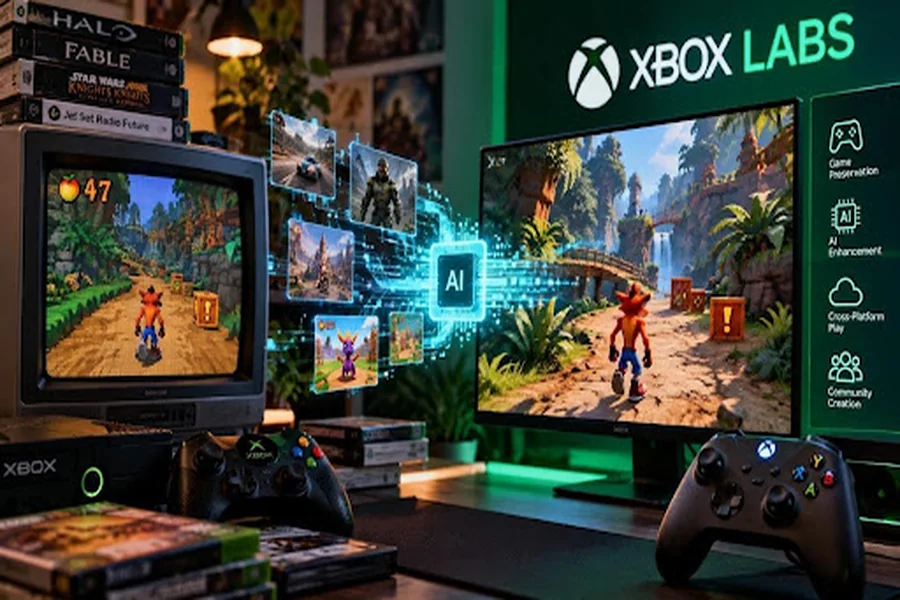
Microsoft is exploring new ways to revive older video games and make them playable on modern devices. Its newly announced Xbox Labs initiative will experiment with artificial intelligence, game modifications, and software preservation, opening another chapter in the evolution of interactive entertainment.
Microsoft is taking a fresh approach to one of gaming’s biggest challenges: keeping older video games accessible as technology changes. On October 14, 2026, the company’s Xbox division unveiled Xbox Labs, an initiative focused on experimenting with artificial intelligence and new methods for adapting games to different hardware.
The project comes as developers and gaming communities increasingly use AI-assisted tools to modify existing titles, recover older software, and explore ways to make games work beyond the systems for which they were originally designed.
Led by Xbox CEO Asha Sharma, Xbox Labs brings together engineers, scientists, and game developers to investigate how these technologies could reshape the industry.
Rather than focusing exclusively on producing new titles, Microsoft wants to explore how existing games can be preserved, transformed, and made available to future generations of players.
Why Microsoft Is Investing in Game Preservation
Video game preservation has become an increasingly important issue as the industry moves toward digital distribution and constantly evolving hardware.
Unlike books or films, video games often depend on specific operating systems, processors, controllers, and online services. When those technologies become obsolete, even popular titles can become difficult to access.
Some games disappear from digital storefronts, while others require original consoles that are increasingly expensive or difficult to maintain. Microsoft’s new initiative aims to investigate technologies that could help overcome these limitations.
According to The Verge’s report on Xbox Labs, the company is particularly interested in AI-assisted game modification, software decompilation, and experimental approaches to bringing games to new platforms.
The announcement does not mean Microsoft has committed to restoring every discontinued title. Instead, it establishes a research initiative that could inform future tools and development practices.
Artificial Intelligence Could Change How Games Are Adapted
One of the technologies attracting attention is decompilation, a process that involves analyzing existing software to better understand its underlying instructions.
Traditionally, adapting an older game to newer hardware can require extensive technical work. Developers may need to recreate parts of the original software, replace outdated systems, and resolve compatibility problems.
Artificial intelligence could potentially assist with some of these tasks by identifying patterns in code, suggesting modifications, or helping developers understand unfamiliar software structures.
This approach might make certain preservation projects more practical, particularly when original development resources are unavailable.
However, technical feasibility does not automatically resolve intellectual property concerns.
Adapting commercial games can involve copyrights, licensing agreements, and permissions that remain relevant regardless of the technology used. These questions will become increasingly important if AI-assisted modifications become more accessible to the public.
From Classic Game Mechanics to Modern Digital Entertainment
The renewed interest in older games also highlights how fundamental gaming concepts continue to influence contemporary entertainment.
Many popular experiences rely on straightforward mechanics: selecting objects, exploring hidden spaces, avoiding hazards, or making decisions based on incomplete information.
These ideas existed long before today’s sophisticated graphics engines.
The classic computer game Minesweeper, for example, demonstrated how a simple grid and concealed hazards could create a recognizable gameplay experience without elaborate visual effects.
Similar visual concepts have appeared in other digital formats, although their rules and objectives can differ considerably. One example is the opportunity to bet on the Mines game through Stake, where the familiar idea of revealing tiles is used in a casino-style experience involving real-money wagers.
Unlike traditional Minesweeper, which is a logic puzzle, casino Mines games involve chance and financial risk. They are intended for adults and are subject to the applicable legal requirements. The comparison illustrates how recognizable interface concepts can evolve into distinct forms of interactive entertainment.
Xbox Wants Players to Become More Involved in Creation
Another interesting aspect of Xbox Labs is Microsoft’s interest in the relationship between game developers and gaming communities.
For decades, enthusiasts have created modifications that introduce new characters, alter gameplay mechanics, or improve the appearance of existing titles.
These modifications, commonly known as mods, have helped extend the lifespan of numerous games.
AI-assisted development tools could potentially lower the technical barriers associated with these activities. Players who lack extensive programming experience may eventually find it easier to experiment with existing software.
For Microsoft, this presents an opportunity to investigate new forms of creativity and participation. It also introduces difficult questions about quality control, intellectual property, and the boundaries between authorized modifications and unauthorized reproductions.
The company has not yet explained how its experimental work will address every legal issue surrounding third-party modifications.
A New Direction for the Gaming Industry
The announcement arrives during a period of significant technological change across the video game business.
Artificial intelligence is already being explored for programming assistance, asset creation, testing, and other development activities.
Microsoft’s initiative adds another possibility: using these capabilities to revisit software that already exists.
This could eventually help developers reduce the technical effort required to adapt older games to contemporary devices. It might also create opportunities for smaller studios interested in revitalizing forgotten titles.
Nevertheless, successful preservation depends on more than software compatibility.
Games can require specialized servers, licensed music, copyrighted characters, and other components that complicate their continued availability. Even when a game can be made technically functional, distributing it commercially may still require agreements with several rights holders.
What Xbox Labs Means for American Gamers
For players in the United States, the immediate impact of the announcement will likely be limited.
Xbox Labs is an experimental initiative rather than a new consumer service, and Microsoft has not announced a comprehensive schedule for releasing restored games through the program. Its long-term significance could be much greater.
As gaming libraries expand and hardware generations change, preserving access to older titles becomes increasingly relevant. Millions of players have digital collections connected to consoles, computers, and online accounts.
Ensuring that these experiences remain usable presents a substantial technical and commercial challenge. The initiative also reflects a broader change in how major technology companies view gaming.
Instead of treating every new console generation as a complete replacement for previous experiences, manufacturers are increasingly exploring ways to maintain connections between old and new software.
The Future of Gaming May Depend on Its Past
Microsoft’s announcement raises an important question: how much of gaming’s future can be built by revisiting its history?
Artificial intelligence may help developers understand older code, experiment with new adaptations, and create opportunities for gaming communities.
But technical innovation alone will not determine whether these projects succeed. Legal permissions, commercial viability, and player demand will remain essential.
For now, Xbox Labs represents an experimental step toward a future in which classic games could become less dependent on the hardware that originally supported them.
The most significant outcome may not be a single revived title, but a new set of tools that allows developers and players to explore gaming’s history in ways that were previously difficult or impractical.