
Essential Feedback Tools – Mirrors for Gym Applications
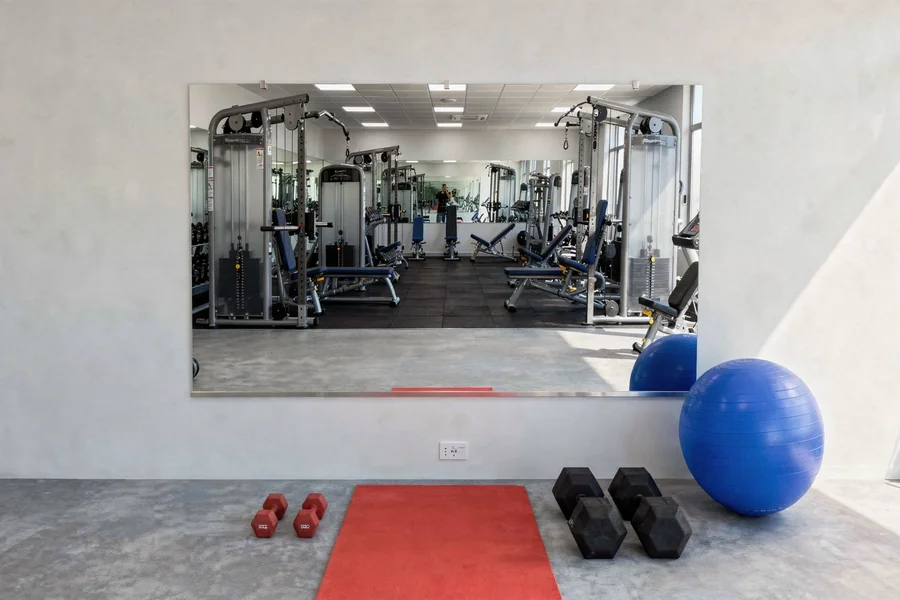
Gym mirrors are foundational to effective and safe training. They serve critical roles far beyond aesthetics, acting as immediate, high-definition feedback mechanisms that help users monitor form, track progress, and ensure symmetry during complex movements. The high-demand, high-impact environment of a fitness center or home gym requires specialized mirror solutions that prioritize safety, durability, and optical accuracy over all else.
Specifying the correct mirrors for gym use involves stringent adherence to safety standards, choosing the appropriate size for comprehensive visibility, and utilizing professional installation techniques to secure these heavy panels. This extensive guide covers the mandatory requirements, material specifications, and design best practices essential for outfitting any fitness space with the correct reflective surfaces.
Non-Negotiable Safety Requirements
In an environment where weights are dropped and explosive movements occur; safety features are paramount for all mirrors for gym applications.
1. Safety Backing (Vinyl-Backed Mirrors)
Every professional gym mirror must be backed with a Category II safety vinyl film. This adhesive film is applied to the back of the mirror glass (the silvered side).
- Function: In the event of an impact that causes the glass to shatter, the vinyl backing contains the shards, preventing them from flying off the wall and scattering across the floor. The glass remains held in place until it can be safely removed.
- Mandate: This feature is often legally required for commercial liability insurance and is the single most important safety feature distinguishing gym mirrors from standard home mirrors.
2. Tempered vs. Plate Glass
The vast majority of large gym mirrors are made from 1/4-inch glass with the mandatory safety backing. While tempered glass is shatter-resistant, it is rarely used for large wall installations because:
- It is significantly more expensive.
- The tempering process can introduce slight surface distortion, which is detrimental to form-checking.
- When it does break, it crumbles into thousands of small cubes, which can still be difficult to clean up in a large area, whereas vinyl-backed plate glass holds the large pieces together.
Sizing and Placement: Maximizing Visibility
Effective mirrors for gym applications must cover the entire area where form-checking is necessary, ensuring users don’t have to crane their necks or guess their alignment.
Full-Body Coverage
- Height: Mirrors should start just above the baseboard (typically $4$ to $6$ inches from the floor) and extend vertically to at least $7$ feet. This height ensures that even the tallest users can see their head, shoulders, and feet simultaneously during squats, overhead presses, or jumps.
- Width (Seamless Paneling): The most effective gyms utilize multiple, large mirror panels placed side-by-side with near-invisible seams to create a wall-to-wall reflection. This panoramic coverage allows users to check both their sagittal plane (front-to-back) and their frontal plane (side-to-side symmetry).
Optical Clarity
The glass used must be high-quality, first-surface mirror glass to guarantee zero distortion. Wavy, rippling, or “funhouse” effects are unacceptable, as they lead to inaccurate feedback on posture and alignment, potentially causing injury.
Professional Installation: Securing Heavy Loads
The sheer weight and size of these mirrors—a 4/8 ft panel weighs over 80 pounds, necessitate specialized, secure installation methods.
1. Mechanical Support is Mandatory
Relying solely on adhesive is insufficient and dangerous. All gym mirrors require mechanical support.
- J-Channels or L-Bars: These metal channels or bars are installed along the bottom edge of the mirror. They bear the primary downward weight, preventing the mirror from sliding.
- Clips or Fasteners: Discreet clips are used along the top edge to hold the mirror tight against the wall, preventing the mirror from peeling away.
2. Mirror Mastic Adhesive
Specialized heavy-duty mirror mastic is used between the wall and the mirror. The mastic is applied in vertical strips or mounds.
- Function: The mastic provides a strong, permanent bond that keeps the entire mirror flat against the wall, preventing vibration and ensuring the glass remains stable and optically clear.
- Wall Preparation: The underlying wall (drywall or plywood) must be structurally sound and free of heavy texture or imperfections, as these can be reflected or compromise the adhesive bond.
Maintenance and Longevity in a Gym Environment
The gym environment introduces unique challenges to mirror longevity, primarily high humidity, frequent cleaning, and potential physical contact.
- Cleaning Solutions: Only use soft cloths and ammonia-free cleaners. Ammonia can penetrate the edges of the mirror, degrading the silver backing and safety film over time, leading to “black edge” corrosion—a common failure point in gym mirrors.
- Edge Protection: Place a gap of $4$ to $6$ inches above the floor and use durable rubber baseboards or padding at the bottom of the mirror wall. This protects the vulnerable bottom edge of the glass from impacts from weights, benches, or cleaning equipment.
- Ventilation: Good air circulation is essential to manage the high humidity and sweat-induced condensation, which prolongs the life of the mirror by minimizing moisture infiltration at the edges.
Conclusion
Effective mirrors for gym use are purpose-built safety devices that deliver critical visual feedback. By prioritizing safety backing and professional, mechanically-supported installation, facility owners ensure a high-performance training tool that is both safe and durable.