
Ditch the Scales: How Refrigerant Charging Stations Boost Accuracy
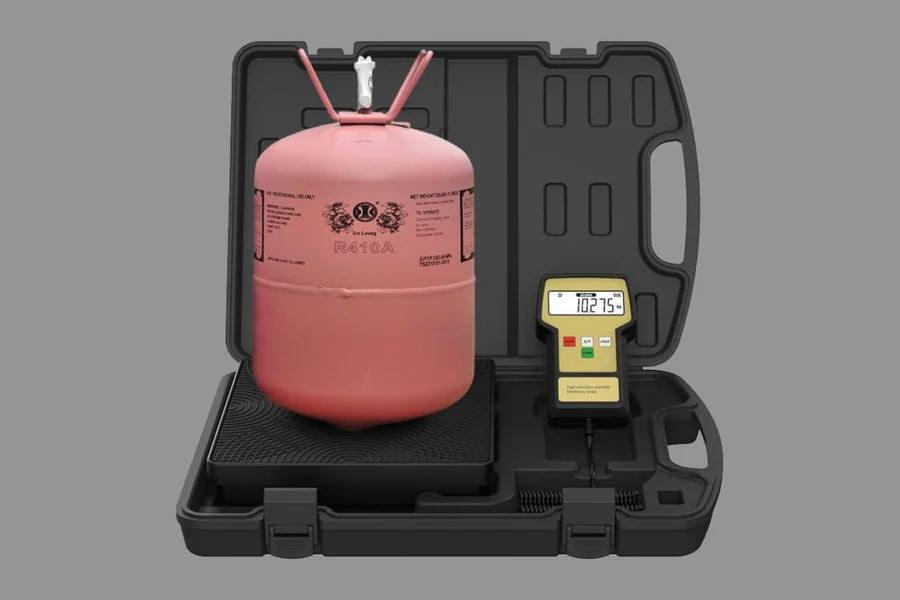
In the world of HVACR manufacturing, precision isn’t just a goal; it’s the standard. Every component, from the smallest valve to the largest coil, must work in perfect harmony. But there’s one process that can feel more like an art than a science: charging refrigerant. For years, the trusty scale has been the go-to tool. And while it has served its purpose, let’s be honest—it’s not without its headaches.
Think about it. An operator manually places a unit on a scale, tares it, and carefully fills it with refrigerant, eyes glued to the display. It’s a method that relies heavily on human attention, which can waver after the tenth—or hundredth—unit of the day. A moment of distraction, a slight overfill, or an unnoticed leak can throw the entire process off. These small inaccuracies add up, leading to wasted material, inconsistent product quality, and frustrating rework.
This is where technology steps in to save the day (and our sanity). Automated refrigerant charging stations are transforming the assembly line, replacing manual guesswork with digital precision. These systems offer a level of accuracy and efficiency that traditional methods simply can’t match. By automating the charging process, manufacturers can significantly reduce errors, minimize downtime, and ensure every unit leaves the factory with the exact amount of refrigerant it needs. Let’s explore how these advanced systems are making HVACR manufacturing smarter, faster, and more reliable.
The Problem with Guesswork
Using a traditional scale and hand valve to charge units is a bit like baking a cake by just eyeballing the ingredients. You might get it right most of the time, but the risk of a lopsided, disappointing cake is always there. In HVACR manufacturing, the stakes are much higher than a failed dessert.
The manual charging process is vulnerable to a range of human errors:
- Overcharging and Undercharging: Even a slight miscalculation or a moment of inattention can lead to an incorrect refrigerant charge. An undercharged unit won’t cool effectively, while an overcharged one can suffer from high head pressure, leading to compressor damage and premature system failure.
- Inconsistent Results: Different operators may have slightly different techniques, leading to variations from one unit to the next. This lack of uniformity can affect overall product quality and brand reputation.
- Slow Production Speeds: The manual process is inherently time-consuming. An operator can only charge one unit at a time, creating a bottleneck on the production line, especially during high-demand periods.
- Material Waste: Every gram of overcharged refrigerant is wasted money. Over a year, this can amount to a significant financial loss, not to mention the environmental impact of venting excess refrigerant.
These issues don’t just affect the final product; they ripple through the entire manufacturing process. Reworking improperly charged units eats up valuable time and labor, pulling technicians away from other critical tasks. The constant need for vigilance can also lead to operator fatigue, increasing the likelihood of mistakes. It’s a cycle of inefficiency that can be difficult to break with manual methods alone.
How Refrigerant Charging Stations Work
So, what makes a refrigerant charging station the hero of this story? It’s all about automation and intelligent control. Unlike the manual method, these systems take the guesswork out of the equation and replace it with repeatable, computer-controlled precision.
A typical automated charging station, like those designed by Airserco, integrates several key components to create a seamless workflow. First, the station’s software is programmed with the exact refrigerant charge specifications for each product model. When a unit arrives at the station, the operator connects the charging hose, scans a barcode to identify the model, and hits “start.” From there, the machine takes over.
The system performs a series of automated checks before charging even begins. It will often conduct a vacuum decay test to ensure there are no leaks in the unit or the connections. If a leak is detected, the process stops, and an alarm sounds, preventing wasted refrigerant and flagging the faulty unit for repair.
Once the system confirms the unit is secure, it delivers the precise amount of refrigerant based on mass flow or gravimetric measurement. Advanced mass flow controllers measure the refrigerant by weight as it flows into the unit, automatically shutting off the valve the instant the target charge is reached. This process is incredibly fast and accurate to within a few grams, eliminating the variables of human judgment and reaction time.
The station records the final charge data for every unit, creating a digital paper trail for quality control. This data can be invaluable for tracking production metrics, identifying trends, and ensuring compliance with industry standards. It’s a closed-loop system that provides control, consistency, and confidence.
Key Benefits of Automated Charging
Switching from manual scales to automated refrigerant charging stations isn’t just a minor upgrade; it’s a fundamental shift that delivers compounding benefits across the production floor.
Unmatched Accuracy and Consistency
This is the most significant advantage. Automated systems deliver the exact same charge, every single time, regardless of the operator. This consistency ensures that every product performs as designed, leading to higher customer satisfaction and fewer warranty claims. You no longer have to worry about the “Friday afternoon” effect, where tired operators might make more mistakes. The machine doesn’t get tired.
Significant Reduction in Downtime
Downtime is the enemy of productivity. Automated refrigerant charging stations minimize it in several ways:
- Faster Cycle Times: The automated process is significantly faster than manual charging, allowing more units to be processed in the same amount of time.
- Reduced Rework: By catching leaks early and eliminating charging errors, the need for rework plummets. Units move smoothly down the line without being sent back for corrections.
- Proactive Maintenance: Many systems come with self-diagnostic features that alert operators to potential issues before they cause a breakdown, allowing for scheduled maintenance instead of unexpected stops.
Lower Costs and Less Waste
Precision saves money. By eliminating overcharging, manufacturers can drastically reduce refrigerant waste. While the initial investment in a charging station may seem substantial, the long-term savings in materials, labor, and rework often provide a rapid return on investment. Furthermore, using less refrigerant is better for the environment, helping companies meet their sustainability goals.
Enhanced Data and Quality Control
In manufacturing, if you can’t measure it, you can’t improve it. Refrigerant charging stations provide detailed data for every cycle. This information allows quality control teams to:
- Verify that each unit is charged to specification.
- Trace any issues back to a specific time or station.
- Analyze production trends to optimize processes further.
This level of traceability is essential for maintaining high standards and for industries that require strict regulatory compliance.
Making the Switch to Automation
Embracing automation is a strategic decision that empowers your workforce and strengthens your competitive edge. When you replace manual, error-prone tasks with reliable technology, you free up your skilled operators to focus on more complex, value-added activities. They can oversee the automated systems, manage quality control, and contribute to continuous improvement initiatives rather than just watching a scale.
Companies like Airserco specialize in creating customized solutions that fit seamlessly into existing production lines. Whether you’re a small manufacturer or a large-scale operation, there are refrigerant charging stations designed to meet your specific needs for volume, refrigerant type, and level of automation. The transition is often smoother than you might think, with modern systems designed for intuitive operation and minimal training.
By investing in automated refrigerant charging, you’re not just buying a piece of equipment. You’re investing in quality, efficiency, and a more resilient manufacturing process that’s ready to meet the demands of the future. It’s time to let the machines handle the tedious work so your team can focus on what they do best: building exceptional products.