
A Honest Guide to the bewildering world of cruise travel
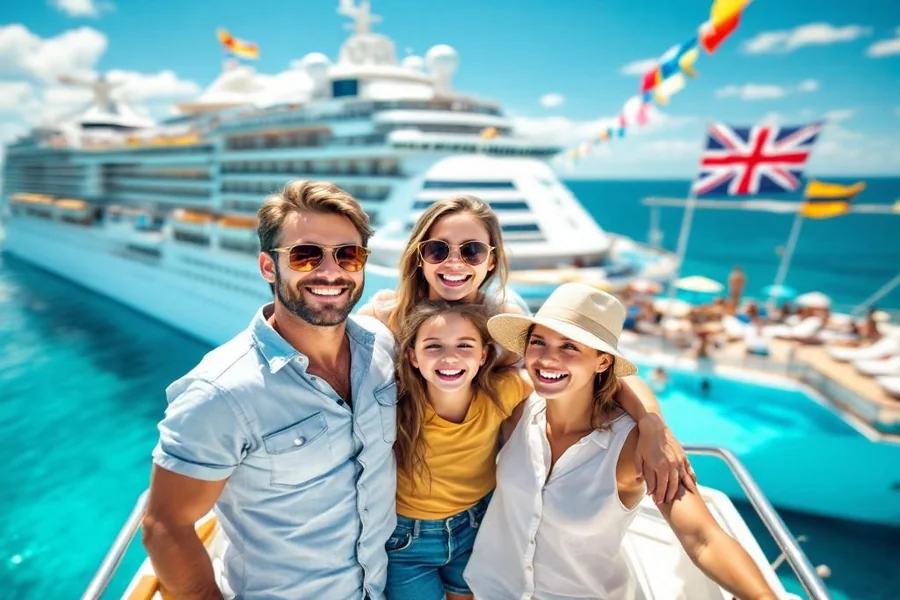
Let’s face it, telling your friends you are going on a cruise usually gets a mixed reaction. Half of them will be jealous of the sunsets and the endless food, while the other half will look at you like you have voluntarily signed up for a floating prison experiment. The truth is, both sides are kind of right, but it depends entirely on which ship you pick. The industry has fractured into so many sub-genres that saying “I’m going on a cruise” is about as specific as saying “I’m going out for dinner”—it could mean a hot dog at a stand, or a seven-course tasting menu with wine pairings.
I still remember my first cruise. I had no idea what I was doing. I booked the first thing that looked cheap and sunny, assuming that all ships were basically the same: big white boats with a pool in the middle and a buffet at the back. Boy, was I wrong. I ended up on a party ship during spring break when I just wanted to read a book and sleep. It was a learning experience, to say the least.
The problem we face today isn’t a lack of options; it is having too many. The cruise lines have spent billions of dollars trying to differentiate themselves, carving out specific niches for every possible human interest and budget. You have ships designed for toddlers, ships designed for foodies, ships for people who want to wear tuxedos, and ships for people who never want to change out of their swimsuit.
Understanding these differences is the only way to guarantee you get the holiday you actually paid for. A lot of people get burned because they chase a low sticker price, only to realize that the atmosphere on board clashes horribly with their personality. Or they splurge on a high-end line, only to be bored to tears because there is no nightlife.
In this guide, we are going to strip away the marketing gloss. We aren’t going to talk about “magical memories” or “unforgettable journeys.” We are going to talk about logistics, demographics, crowd sizes, and what you actually get for your money.
Whether you are a solo traveler looking to escape, a family trying to keep three generations happy, or a couple looking to blow the kids’ inheritance, there is a deck chair out there with your name on it. You just have to know where to look.
The massive floating resorts
Let’s start with the beasts of the ocean. When you see a commercial for a cruise on TV, this is usually what they are selling. We are talking about Royal Caribbean, Carnival, MSC, and Norwegian. These ships are marvels of engineering, effectively skyscrapers turned on their side and pushed into the water.
The scale is hard to comprehend until you are standing next to one. They carry anywhere from 4,000 to nearly 7,000 passengers. The philosophy here is “more is more.” If you get bored on these ships, it is honestly your own fault. They are packed with waterslides, escape rooms, laser tag arenas, ice rinks, and Broadway-style theaters.
But there is a trade-off for all this fun. It is busy. Really busy. You are sharing your vacation with the population of a small town. That means you need to be organized. You often have to book your shows and your dinner times weeks in advance via an app. If you are the type of person who likes to just wake up and see where the day takes you, the regimented schedule of a mega-ship might grate on you.
That said, these lines are improving at handling crowds. They have designed the ships with “neighborhoods” to disperse people, so it rarely feels like a stampede unless you are trying to leave the theater at the exact same time as everyone else. They are also the best option for multi-generational travel. Grandparents can listen to jazz, parents can hit the casino, and the teenagers can disappear into the video game arcade, and everyone meets up for dinner.
The luxury cruises
This is where things get interesting, and expensive. If the mega-ships are Las Vegas, luxury cruises are a private estate in the Hamptons. Lines like Swan Hellenic occupy this market segment.
The first thing you notice is the silence. There are no announcements blasting over the loudspeaker telling you about a bingo game. There are no photographers jumping out from behind pillars to take your picture. The ships are smaller, usually carrying fewer than 600 or 700 people, which means they can dock in tiny ports that the big ships can’t even get close to. You might find yourself docked right in the center of Monte Carlo or St. Tropez, walking off the gangway directly into the action without needing a tender boat.
But the real luxury here isn’t the champagne (though that is nice); it is the time and space. You never wait in line. Not for dinner, not for a drink, not to get off the ship. The crew-to-passenger ratio is often nearly one-to-one. It creates a level of service that can feel almost telepathic. You order a specific cocktail on the first night, and the bartender remembers it for the rest of the week.
Of course, the price tag is steep. But you have to look at the math. These cruises are typically all-inclusive. That means your gratuities, your open bar, your specialty coffees, your wifi, and sometimes even your shore excursions are included in the fare. On a mass-market ship, that bill at the end of the cruise can be a nasty shock. On a luxury line, you walk off without paying an extra cent. It is a completely different psychological experience when you aren’t signing a receipt every time you want a bottle of water.
The “premium” middle ground
Sitting comfortably between the chaos of the mega-ships and the high cost of luxury are the premium lines: Celebrity, Holland America, Princess, and Cunard.
These are excellent choices if you want amenities but don’t need a roller coaster on the top deck. The vibe is more adult, slightly more sophisticated, and the pace is slower. You will find better food than on the budget lines, nicer linens, and generally a crowd that is more interested in travel than partying.
This is also where you find the “traditionalists.” Holland America and Cunard, in particular, lean into the history of ocean travel. You might find high tea served in the afternoon, ballroom dancing hosts, and enrichment lectures about the history of the ports you are visiting. It is refined without being stuffy.
River cruising: the anti-cruise
If the idea of open ocean swells makes you green, look at the rivers. River cruising is booming, especially in Europe along the Danube, Rhine, and Seine, but also on the Mekong in Asia and the Nile in Egypt.
The pacing here is completely different. On an ocean ship, the ship is often the destination. On a river cruise, the ship is just a fancy taxi. You travel mostly at night and wake up docked in the heart of a new city. You walk off, explore a medieval town or a vineyard, and walk back on for dinner.
The ships are long and narrow, restricted by the size of the locks they have to pass through. This means amenities are limited. You won’t find a casino or a big gym. The cabins can be smaller than ocean standards. But the intimacy is unmatched. With only 150 to 190 passengers, you get to know people. The atmosphere is very social, often resembling a dinner party that lasts for a week.
Expedition voyages
For the adventurers, there is the expedition sector. This is for people who want to see penguins in Antarctica, polar bears in Svalbard, or blue-footed boobies in the Galapagos. Companies like Lindblad, Hurtigruten, and Ponant specialize in this.
Forget the evening gowns; you need waterproof pants and a parka here. The focus is education and exploration. You spend your days on Zodiac boats (heavy-duty inflatables) getting wet and cold, and your evenings listening to lectures from naturalists and geologists.
It is not relaxing in the traditional sense—it is often physically demanding—but it is deeply rewarding. These cruises go to the ends of the earth, literally. Because of the remote locations and the specialized equipment required, these are often among the most expensive cruises per day, but you are paying for access to places that are virtually impossible to reach any other way.
The budget hacks and repositioning cruises
Finally, if you want to cruise but your bank account says “no,” look for repositioning cruises. These happen when cruise lines need to move a ship from one region to another for the changing seasons—like moving a ship from the Caribbean to the Mediterranean in the spring.
Because these voyages involve a lot of sea days (sometimes five or six in a row across the Atlantic) and are one-way trips, they are hard to sell. That means the prices can be insanely low. I have seen transatlantic crossings for less than $50 a day per person.
The catch is that you have to pay for a one-way flight home, and you have to be comfortable being in the middle of the ocean for days on end. But if you are a writer, a reader, or someone who just wants to disconnect from the world for two weeks without spending a fortune, it is the best kept secret in the travel industry.
TAKEAWAY
Here is the cheat sheet to help you navigate your decision:
- if you want non-stop action, huge water slides, and a bustling city vibe, stick to the Mega-Ships like Royal Caribbean or Carnival;
- if you value your time, hate queues, and want an all-inclusive experience with top-tier service, the investment in a Luxury Cruise like Seabourn or Silversea is worth it;
- if you want a balance of nice amenities and a calmer atmosphere, the Premium lines like Celebrity or Holland America are your sweet spot;
- if you want to see the interior of a country and avoid sea sickness entirely, choose a River Cruise;
- if your goal is wildlife and nature and you don’t mind the cold or the physical exertion, book an Expedition cruise;
- if you are on a tight budget and have plenty of time, hunt for Repositioning cruises in the spring and autumn.
Sources and more tips for travellers.
For those who want to dig deeper into deck plans and current pricing, these resources are invaluable:
- Cruise Critic(essential for reading honest reviews from past passengers);
- Vacations To Go(an older-looking website, but it has one of the best search engines for repositioning and last-minute deals).