
How Can a Roofing Contractor Tell Whether Flashing Damage Is Causing Interior Leaks?
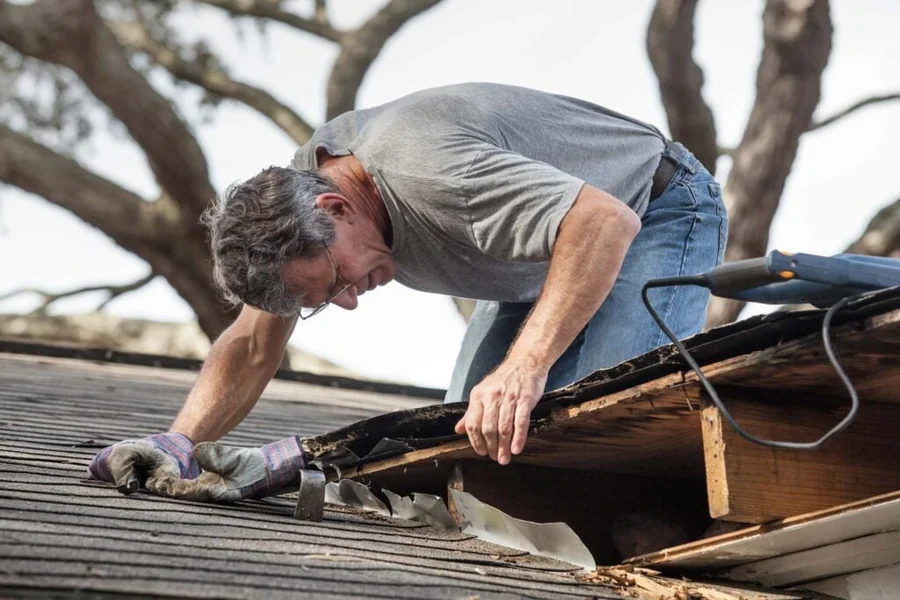
Interior leaks are often blamed on shingles because shingles are the part everyone can see. In reality, many leak investigations turn toward the metal transitions around chimneys, walls, vents, skylights, and roof edges. That is where water often penetrates past the outer surface and enters the building envelope.
For property managers, facility teams, and building owners, this distinction matters. A ceiling stain may look simple, yet the true entry point can sit several feet away from where the moisture finally appears indoors. Roofing contractors determine whether flashing damage is the cause by tracing water paths, inspecting transition details, and separating flashing failure from broader roof-system problems. The goal is not to guess where water got in. The goal is to prove it.
Transitions Deserve Closer Attention
- Leak Location Rarely Tells Enough
An interior leak does not necessarily indicate the exact location where the roof failed. Water can travel along decking, framing, underlayment, or wall assemblies before it becomes visible on a ceiling tile, painted wall, or upper-floor finish. That is why experienced roofing contractors do not start with the stain alone. They start by comparing the interior symptom to the roof features located above and around that area.
Flashing becomes a prime suspect when the leak appears near penetrations or transitions rather than in broad, open-field areas of the roof. Chimneys, step walls, pipe boots, skylights, dormers, and roof-to-wall intersections are all common trouble points. A contractor knows that these areas depend on properly layered metal details, seal integrity, and correct overlap. When those details shift, separate, corrode, or were installed poorly in the first place, water often follows.
- Where Water Usually Gets Through
A careful roofer does not treat every leak as a surface issue. The moisture pattern, the location of the roof detail, and the age of the assembly all shape the diagnosis. Companies familiar with conditions like those handled by Three Tree Roofing near Bellevue often understand that leak detection depends on reading the entire transition, not just checking whether a shingle looks worn. Flashing damage is often subtle at first, but the effect indoors can become persistent long before the failure is obvious from the ground.
That is why contractors inspect not only the exposed metal but also the surrounding materials that make the flashing work. Counterflashing, step flashing, sealant joints, fastener placement, siding clearance, underlayment tie-ins, and drainage direction all affect whether water is being directed out or allowed to work its way behind the system. A leak investigation becomes much more accurate when those components are evaluated as a unit.
- Visual Clues Often Point First
Roofing contractors usually begin by looking for visible signs of distress around flashing locations. Rust, lifted edges, loose counterflashing, cracked sealant, exposed fasteners, bent metal, open seams, and staining below a roof penetration can all indicate that the flashing assembly is no longer shedding water as it should. These signs matter because flashing is not just a cover piece. It is a drainage control component, and even a small separation can redirect water into vulnerable areas.
The surrounding roofing materials are checked at the same time. If shingles remain in generally sound condition but the leak persists near a roof transition, flashing becomes more likely as the source. Contractors also look for patch history. Repeated caulking, mismatched repairs, or isolated roof cement around metal details often indicate that someone tried to stop a leak symptom without correcting the underlying transition problem.
- Water Entry Patterns Help Confirm
Interior leak behavior can also help narrow the diagnosis. If water appears mainly during wind-driven rain, flashing damage becomes more likely because wind can push water sideways into roof-to-wall joints, around chimneys, or beneath improperly lapped metal. By contrast, leaks caused by general roof field wear may show up more consistently during prolonged rain across the entire roof surface.
A contractor also considers whether the leak is tied to a specific rainfall volume or starts quickly after a storm begins. Flashing failures often respond to exposure angle and runoff concentration rather than to total rainfall alone. For example, a leak around a chimney may appear only when rain strikes one roof slope from a certain direction. That pattern helps distinguish transition failure from broader membrane or shingle deterioration.
Diagnosis Depends On Evidence
Flashing damage causes interior leaks more often than many building owners expect, but it should never be assumed without proof. A strong roofing contractor confirms the cause by comparing indoor moisture patterns with roof transitions, closely inspecting metal details, checking surrounding materials, and tracing water paths through the assembly. That evidence-based process is what separates a durable repair from another temporary patch. When physical details are correctly diagnosed, replacing damaged materials rather than applying basic seals helps ensure long-term stability. Property owners seeking reliable local guidance can coordinate with seasoned specialists in Roofing Carrollton TX to establish proper drainage paths. Implementing structured checks and replacing compromised flashings before severe downpours limits interior water deterioration.
For property managers and facility teams, that approach protects both budget and building performance. Misreading a flashing leak as a shingle problem can leave the real opening untouched, while repeated interior damage continues. When contractors diagnose the transition correctly, repairs become more precise, leak recurrence drops, and the roof system returns to doing what it is supposed to do: move water out before it reaches the interior.