
What Should You Compare Before Opening a Gold IRA?

While it’s important to know who ranks #1 among gold IRA companies, it’s even more important to make sure that you understand the basics of precious metals IRAs and rollovers so that you can pick the gold IRA company that best meets your needs.
A Gold IRA is a special type of self-directed IRA. Rather than holding the stocks, bonds, mutual funds, and other conventional investments that populate most IRAs, a gold IRA can hold precious metals in the form of certain types of approved bullion. This means that Gold IRAs also differ from conventional IRAs in the ways that they’re established and managed.
Know Who Handles Each Part of the Account
There are multiple parties involved in setting up and managing a Gold IRA. These parties may include:
- An account custodian who will serve as the administrator of your self-directed IRA
- A precious metals dealer who will help you purchase the metals that you’ll hold in your IRA
- An IRS-approved depository where your bullion will be held
- A Gold IRA company to help you navigate the process and handle the logistics of establishing your Gold IRA, including any necessary rollovers and/or transfers from other retirement accounts
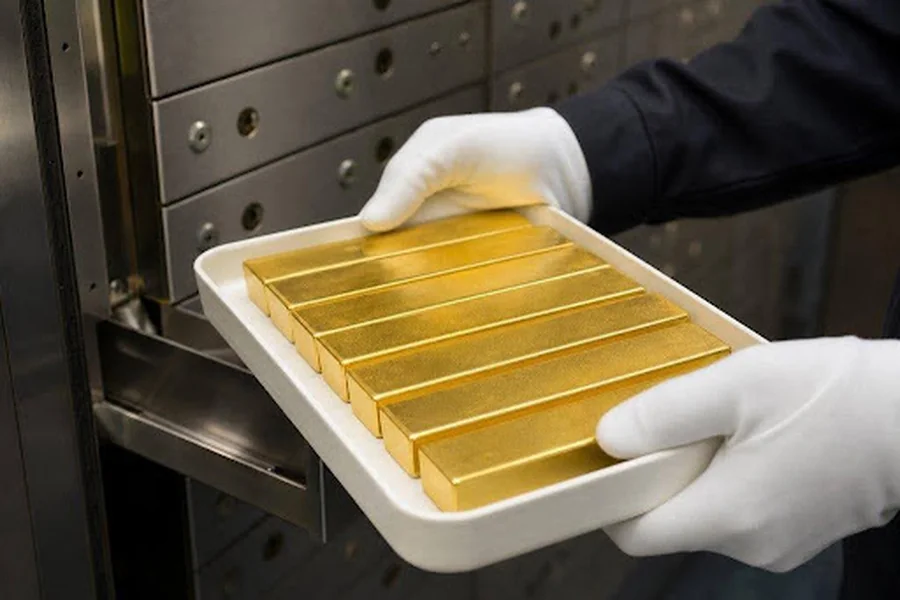
Many gold IRA companies will partner with a select group of custodians and/or depositories and steer you toward those custodians/depositories. That’s not necessarily a bad thing, but you should ask if you have any flexibility in this regard and whether there are any advantages/disadvantages to using their preferred custodian(s) and depository(ies).
It’s also important to note that, while the metals that you hold in your Gold IRA will belong to you, they cannot be sent to you for safekeeping. IRS-approved depositories must hold the metals at all times, since taking direct possession of the metals can jeopardize the tax treatment of your IRA and lead to other undesirable consequences.
Get Every Fee and Markup in Writing
Each Gold IRA company will tout its low fees, and many will offer promotions that waive certain fees (such as account setup or the first year of storage fees). However, you’ll want to make sure that you have a handle on all of the fees that could impact you so that you can make an apples-to-apples comparison with other Gold IRA companies. You can compare those fees across a wider range of gold IRA companies when you get the full list.
Request a full, written fee disclosure that lays out all account set-up fees, annual fees, transaction fees, shipping/insurance fees, storage fees, and so forth. It’s also critical to understand how your dealer marks up the price of metals. Depending on the mark-up, you may end up with substantially less gold/silver/platinum/palladium for your hard-earned retirement savings.

You may also want to ask if their quote/pricing will be good for at least 30 days so that you can take your time without feeling like you’re being rushed into a decision. Be wary if your sales contact is evasive when asked about fees and/or unable to provide a sense of how the all-in cost may vary over time.
Compare Bullion Purity, Liquidity, and Premiums
Gold/silver/platinum/palladium coins and bars that can be held in IRAs must meet certain minimum standards (chiefly in terms of fineness/purity). Ask about which products are IRA-approved so that you can get a sense of what options are available.
That said, not all IRA-approved bullion coins and bars are equally liquid/easy to resell down the road, and some command higher premiums due to scarcity, collectibility, design, and so forth. Your precious metals dealer should be able to educate you on the relative pros and cons of various bullion coins and bars that are commonly available.
Finally, be leery of dealers/sales contacts who try to rush you into a purchase and/or steer you toward expensive collectibles that they tout as scarce, limited in availability, etc. Such collectibles are inherently more difficult to value and may not be right for you, particularly if your primary goal is to gain exposure to the commodity value of gold/silver/platinum/palladium.
Confirm the Funding and Rollover Sequence
Funding your Gold IRA could entail rolling over funds from an employer-sponsored retirement plan, transferring assets from an existing IRA, or some combination thereof. These are very different processes with different steps, and a reputable Gold IRA company should make that distinction.
Typically, your rollover/contribution should be made out directly to your new self-directed IRA account (either directly from the plan administrator/custodian or per the instructions from your self-directed IRA custodian). Don’t assume that you’ll be able to just “temporarily” receive the assets with an eye to sending them over to the proper account later on.
Other questions to consider:
- What paperwork is required for funding and what needs to happen first?
- Who monitors/controls the rollover/contribution process?
- When can I purchase precious metals?
- What happens if I choose a coin/bar that’s unavailable?
- What records/reports will I receive (for tax reporting purposes)?
The level of detail/transparency provided here will give you a sense of how organized a particular Gold IRA company is and/or whether their focus is on making the sale or actually getting the job done right.
Expect Clear Answers Without Sales Pressure

The best Gold IRA companies will welcome questions (no matter how pointed) and provide straightforward answers. They should also be forthcoming with educational materials (both up front and after your account is opened) and follow through in writing on the key points they’ve discussed with you.
- tries to rush you into a decision;
- is evasive on fees; or
- makes overblown claims (e.g., that gold/silver/platinum/palladium will protect you from all manner of economic woe).
Save the Paperwork Before You Submit Anything
A reputable Gold IRA company will walk you through the account set-up process, investment options, available storage options, and associated fees. Make sure you get a handle on the nitty-gritty details of each of these and be sure to ask for the full fee schedule and storage information in writing before you set up your account. It’s also a good idea to save account-related paperwork (transaction confirmations, account statements, fee schedules, correspondence, etc.) so you’ll have an easy-to-reference record down the road.